Top AI Tools in Marketing: Transforming Modern Marketers
AI is being used everywhere, and it won’t be wrong to say that AI is revolutionizing every other industry especially marketing. It could be attributed to its ability to orchestrate different functions in marketing, be it for content generation, strategizing ideas, creating copy, optimizing speed, or increasing scale. Research by Jasper (State of Marketing 2026) mentioned that 91% of the marketing teams use AI in 2026, in comparison to only 63 % usage in 2025.
If ‘ChatGPT’ is the only AI tool you’re familiar with today, it’s time to expand your skill set and explore a broader range of AI technologies. ChatGPT is just the starting point — the AI ecosystem offers far more powerful tools and opportunities.
Below are some of the most useful AI tools that marketers can leverage, these tools are being personally used by me and tested by friends who also work in the field of marketing. And I can personally vouch for these AI tools used in Marketing.

Let’s explore the below tools transforming AI in Marketing
1. ChatGPT, AI powered Content Generation Platform

ChatGPT needs no introduction, this single platform changed the way we look at things, or how we work, or how we express. ChatGPT has been in the forefront of mostly all the other AI tools. It won’t be wrong to say, ChatGPT was surely the starting point where people actually realized the importance of AI. It was and is the go-to AI tool. We surely use it like our personal therapist, but it is much more than that.
Key Uses Cases for Marketers Include:
- AI generated content: Marketer can leverage ChatGPT for creating AI generated content for their blogs, posters for your events, and even brainstorm ideas for your next campaign.
- Generate ICP/ Different Persona Mapping: If you are working in a product role, then you can even ask for ICP and ask for different personas
- Roadmap Creation: If you work as GTM strategist, you can create roadmaps for you Go to market strategy
- Campaign Ideation: If you work as a social media marketer, you can create content calendars, social media carousel ideas, plan your campaign strategy.
2. Canva, AI-Powered Visual Content Creation
Canva has long been a favorite among marketers and designers, offering an intuitive, cloud-based design platform with ready-made templates for presentations, social media posts, posters, resumes, and marketing decks. Its user-friendly interface makes visual content creation accessible even to non-designers.
With the integration of Artificial Intelligence (AI) and machine learning, Canva has evolved into a powerful AI-driven design tool.
Key Use Cases for Marketers Include:
- Features like AI image generation, smart layout suggestions, automated background removal, brand kit automation, and content recommendations streamline the creative workflow.
- Marketers can now leverage generative AI, AI-powered copy suggestions.
- Automated design enhancements to produce high-quality visuals faster, enabling scalable content marketing and improved brand consistency.
3. Midjourney, AI Image Generation from Text

Midjourney is a leading generative AI platform that transforms text prompts into highly detailed images and creative visuals. Using advanced text-to-image models and deep learning algorithms, it enables marketers, content creators, and brands to generate unique, campaign-ready graphics within seconds.
Key Use Cases for Marketers include:
- Provide a well-crafted prompt, and the AI produces visually compelling outputs that can be used for ads, social media, branding, and storytelling.
- Helps with AI content generation, creative automation, and visual storytelling, reducing production time while enhancing personalization and campaign innovation.
- Midjourney operates on both free and subscription-based models, making it accessible for experimentation as well as professional marketing use.
For marketers, tools like these are game changers in
An alternative like Nano Banana also offers similar AI-powered image and video generation capabilities.
4. Jasper AI, Tool for copywriting, Create Marketing Copy in Minutes
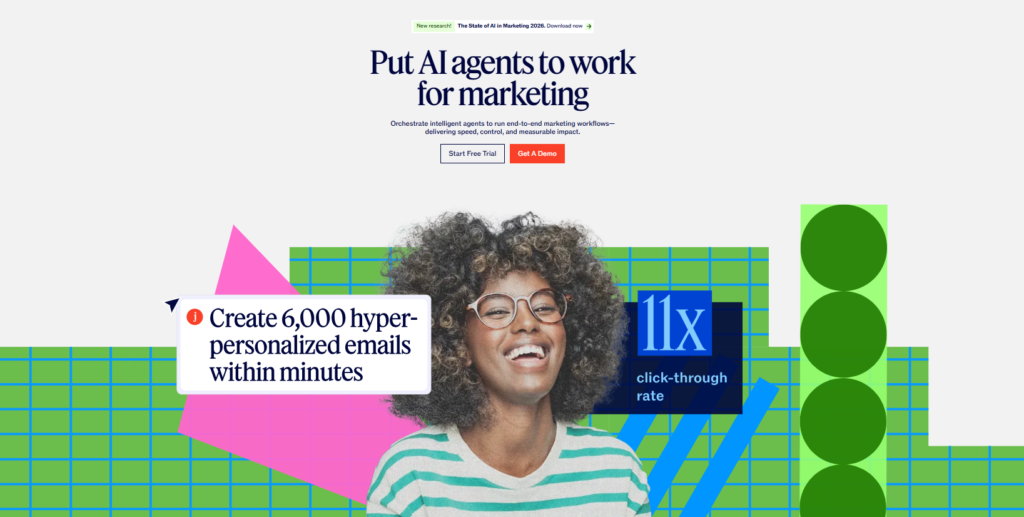
Jasper AI is one of the most recognized AI copywriting tools in the marketing space. Designed specifically for businesses and content teams, Jasper leverages natural language processing (NLP) and generative AI to create high-converting marketing copy in minutes.
Key Use Cases for Marketers Include:
- Marketers can use Jasper to generate blog posts, product descriptions, email campaigns, ad copy, landing page content, and social media captions — all tailored to different tones, audiences, and brand voices.
- With 80+ templates and advanced AI-driven content optimization, it supports scalable content marketing automation and improves productivity across campaigns.
- By using AI-powered writing assistants like Jasper, brands can enhance personalization, accelerate content production, and improve conversion-focused messaging.
Alternatives:
Copy.ai – A popular AI content generation platform for sales and marketing teams.
Grammarly – An AI-powered writing assistant that improves grammar, clarity, tone, and overall communication effectiveness.
5. Notion AI, AI-Enhanced Marketing Productivity
Notion has become a favorite productivity platform for professionals across industries. From building portfolios to managing content roadmaps and marketing calendars, Notion offers a flexible, collaborative workspace that adapts to individual and team needs.
With the integration of Notion AI, the platform has evolved into a powerful AI-enhanced productivity system. It combines knowledge management with AI-powered writing, summarization, idea generation, and workflow automation, making it highly valuable for marketers.
Key use cases for marketers include:
- Creating content roadmaps, GTM (Go-To-Market) strategies, and editorial calendars
- Collaborating seamlessly with teams through shareable workspaces
- Customizing dashboards and workflows with drag-and-drop flexibility
- Using free and customizable templates for campaign planning
- Leveraging AI to rewrite content, generate ideas, build templates, summarize notes, and enhance brainstorming sessions
Notion AI acts as a digital marketing co-pilot, helping marketers plan, organize, and execute campaigns more efficiently. Many professionals start with Notion as their central workspace and integrate other AI marketing tools into their ecosystem for a streamlined workflow.
6. Surfer SEO, Real-Time AI Content Optimization
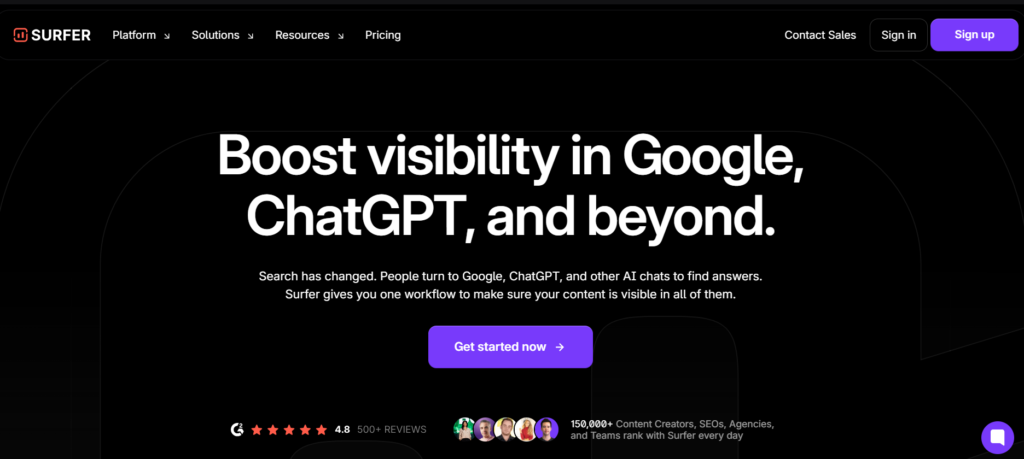
Surfer SEO is a powerful AI-driven SEO optimization tool designed to help marketers improve their content rankings in search engine results pages (SERPs). It provides real-time content scoring, keyword suggestions, NLP-based recommendations, and competitive analysis to ensure your content aligns with current search intent and ranking factors. Although it is a paid tool, many marketing teams and agencies consider it one of the best real-time content optimization platforms for improving organic visibility and driving search traffic. If budget allows, it can be a valuable investment for serious SEO and content marketing strategies.
Key Use Cases for Marketers:
Using data-driven algorithms and on-page SEO analysis, Surfer SEO evaluates keyword density, content structure, headings, internal linking, and semantic relevance. This allows marketers to optimize blog posts and landing pages while writing, rather than after publishing.
7. Sprinklr, Enterprise AI for Customer Experience
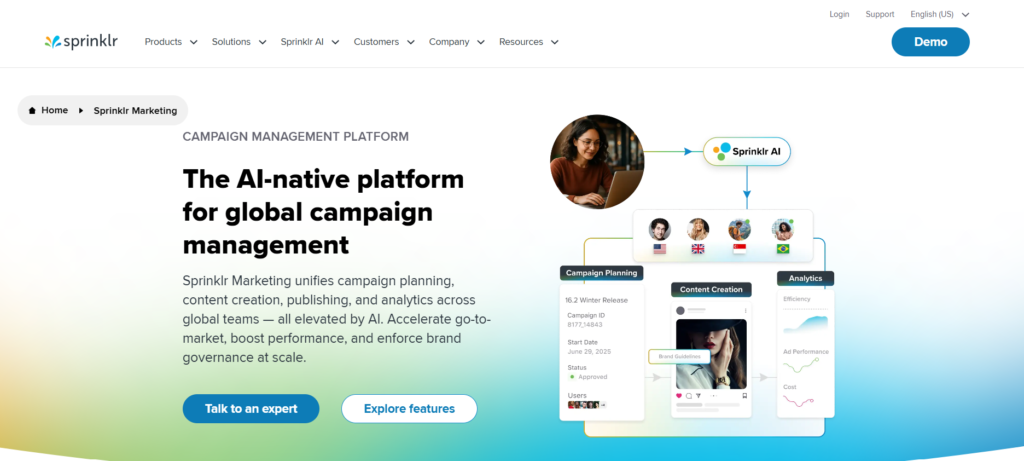
Sprinklr is an enterprise-level AI-powered customer experience management (CXM) platform. It helps large brands manage social media, customer engagement, advertising, and analytics from a single unified dashboard.
Key Use Cases in Marketing:
- With advanced AI analytics, social listening, sentiment analysis, and marketing automation, Sprinklr enables brands to monitor conversations, respond to customers in real time, and optimize paid and organic campaigns.
- Its machine learning capabilities help identify trends, predict customer behavior, and enhance personalized marketing strategies at scale.
- For enterprises focused on omnichannel marketing and customer experience optimization, Sprinklr is a robust AI-driven solution.
8. SEMrush, AI-Driven SEO & Competitive Intelligence
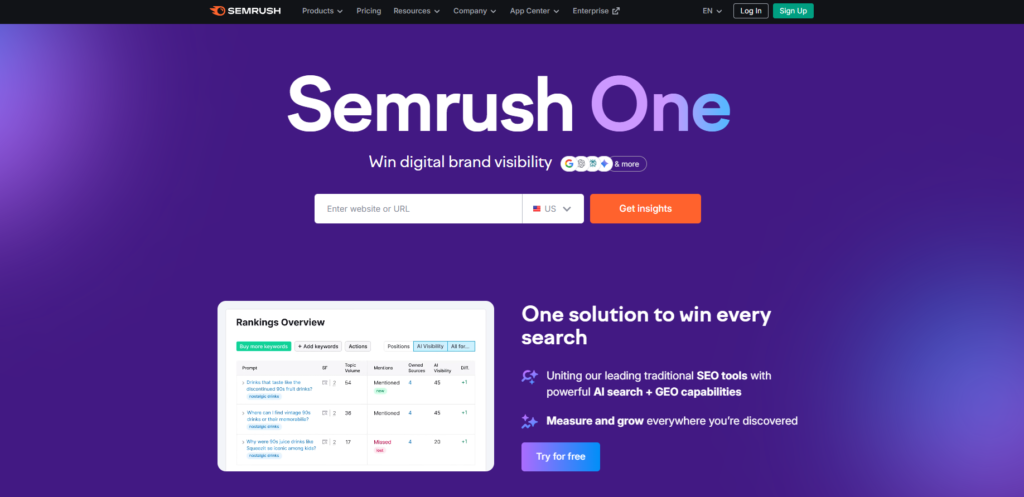
SEMrush is one of the most comprehensive SEO and digital marketing intelligence tools available today. It offers features for keyword research, competitor analysis, backlink tracking, content marketing, PPC research, and site audits.
Key Use Cases for Marketers
- With AI-enhanced data insights, SEMrush helps marketers identify high-ranking keywords, analyze search trends, and optimize their content strategy for better visibility in SERPs.
- Its SEO analytics, traffic insights, and domain authority tracking make it an essential tool for performance-driven marketers.
- For businesses aiming to scale their search engine marketing (SEM) and organic growth strategy, SEMrush provides actionable, data-backed recommendations.
9. HubSpot, All-in-One AI Marketing & CRM Platform
HubSpot is a comprehensive AI-powered inbound marketing and CRM platform that integrates essential tools for lead generation, content creation, email marketing, social media management, automation, and analytics into one unified ecosystem. This seamless integration allows marketing and sales teams to operate more efficiently and maintain consistent messaging across campaigns.
Key Use Cases for Marketers:
- Lead Generation & CRM Integration
- AI Blog Writer & Content Tools:
- Email Marketing Automation:
- Social Media Management
- Analytics & Reporting
Final Thoughts: The Future of AI in Marketing
AI is not replacing marketers — it is empowering them. From AI content generation and SEO automation to predictive analytics and customer personalization, these tools enable marketers to focus more on strategy, creativity, and growth rather than repetitive tasks.The real competitive advantage lies not in using just one AI tool, but in building an integrated AI marketing stack that combines:
- Content generation
- Design automation
- SEO optimization
- Marketing automation
- Data analytics
- Customer experience management
As AI continues to evolve, marketers who adopt and adapt will lead the future of digital growth.
Frequently Asked Questions (FAQs) About AI Tools in Marketing
1. What are the best AI tools for marketing in 2026?
Some of the top AI marketing tools include ChatGPT for content and strategy, Canva for AI-powered design, Jasper AI for copywriting, Surfer SEO and Semrush for SEO, and HubSpot for marketing automation and CRM. The best tool depends on your specific marketing goals.
2. How is AI transforming digital marketing?
AI is transforming digital marketing through content automation, predictive analytics, personalization, SEO optimization, chatbots, and data-driven decision-making. AI-powered tools help marketers generate content faster, analyze audience behavior, improve campaign targeting, and optimize ROI in real time.
3. Can AI tools replace marketers?
No, AI tools are designed to assist, not replace, marketers. While AI can automate repetitive tasks like content drafting, keyword research, and reporting, human creativity, strategy, emotional intelligence, and brand storytelling remain essential.
4. Which AI tool is best for content creation?
For written content, Jasper AI and ChatGPT are widely used. For visual content, Midjourney and Canva are strong options. The best choice depends on whether you need text, images, or both.
5. Are AI marketing tools suitable for small businesses?
Yes. Many AI tools offer free plans or affordable pricing tiers like beginner version of ChatGPT, Canva, Perplexity, Claude, and SEMrush are free versions. Marketer can use those versions and accordingly upgrade.
6. How does AI improve SEO performance?
AI-powered SEO tools like Surfer SEO and Semrush analyze keyword trends, competitor strategies, content structure, and search intent. They provide real-time optimization recommendations that help improve rankings in search engine results pages (SERPs).
7. What is the role of AI in marketing automation?
AI enhances marketing automation by enabling behavior-based email sequences, lead scoring, predictive customer insights, and personalized messaging. Platforms like HubSpot use AI to streamline customer journeys and improve conversion rates.
8. How can AI help with market research?
Tools like Perplexity AI and ChatGPT assist with research by summarizing complex topics, identifying trends, analyzing competitors, and providing quick, contextual insights.
9. Is it necessary to use multiple AI tools in marketing?
Not necessarily but combining tools often creates a stronger AI marketing stack. For example: Use ChatGPT or Jasper for content, Canva or Midjourney for visuals, Surfer SEO or SEMrush for optimization, HubSpot for automation and CRM. Using different AI tools for Integration improves efficiency and scalability.
10. What is the future of AI in marketing?The future of AI in marketing includes hyper-personalization, predictive analytics, conversational AI, autonomous campaign optimization, and deeper data integration. Marketers who adopt AI strategically will gain a competitive advantage in efficiency, innovation, and customer engagement.